
Doubloons: Spanish Gold Coins, Their History and Value
Doubloons were Spanish gold coins, struck from the 1530s to 1849 across the Spanish empire. In pirate films they spill out of every treasure chest. In real life one doubloon was worth 16 pieces of eight, so most sailors never held one.
This guide is for collectors of pirate and ship coins, and for anyone who met the word in a novel or a game. It matters when you buy: fake "pirate gold" is common, and real doubloons sell above their gold value.
Here is what doubloons are, how they reached pirates, the $9.36 million Brasher doubloon, the doubloons of Mardi Gras and what a Spanish gold doubloon is worth today, with three coins from our maritime coins collection.
TL;DR
- A doubloon is a Spanish gold coin. In Spain the doblón was the 2 escudos; in English the word usually refers to the big eight-escudo piece.
- The largest doubloon weighs 27.07 g of 22-karat or slightly lower gold, about 0.76 to 0.80 troy oz pure.
- One doubloon equaled 16 pieces of eight.
- The 1787 Brasher doubloon sold for $9.36 million in 2021.
- Mardi Gras doubloons are aluminum parade tokens, first thrown in 1960.
What Are Doubloons?
Doubloons are the gold coins of Spain's escudo system. The name comes from the Spanish doble, "double", and the dictionary defines it simply as an old fashioned gold coin of Spain.
There are two theories about the "double". One says the coin equaled two ducats. The other points to the double portrait of the Spanish monarchs Queen Isabella and King Ferdinand on their gold coins.
In Spain the doblón was the 2 escudos, about seven grams and equal to four Spanish pieces of eight. In English the common form of the word refers to the largest denomination, the eight-escudo piece, valued at about $16 in the American colonies.
How Doubloons Were Made
The escudo arrived in 1535–1537. Most doubloons minted for the empire came from the New World, though Spain also struck them in Seville and Madrid, in Mexico City and Lima, and in Santa Fe de Bogotá in New Granada (Nueva Granada), today's Colombia, which supplied much of the metal.
| Denomination | English name | Weight | Equal to |
|---|---|---|---|
| 2 escudos | pistole | about 6.8 g | 4 pieces of eight |
| 4 escudos | double pistole | about 13.5 g | 8 pieces of eight |
| 8 escudos | doubloon | 27.07 g | 16 pieces of eight |
Coins struck until 1771 are 22-karat (.917). From 1772 the standard dropped to .901, and later to .875.
Early doubloons were hand-stamped cobs. Habsburg kings put the royal coat of arms on the obverse and a Crusader's cross on the reverse. From 1732 round, machine-made pieces replaced cobs in Mexico City, and later issues carry the king's bust.
For a picture of a real one, see the 1713 Mexico City doubloon at Colonial Williamsburg, one of many museum examples: about 31 mm across, smaller than a dollar, heavier than it looks.

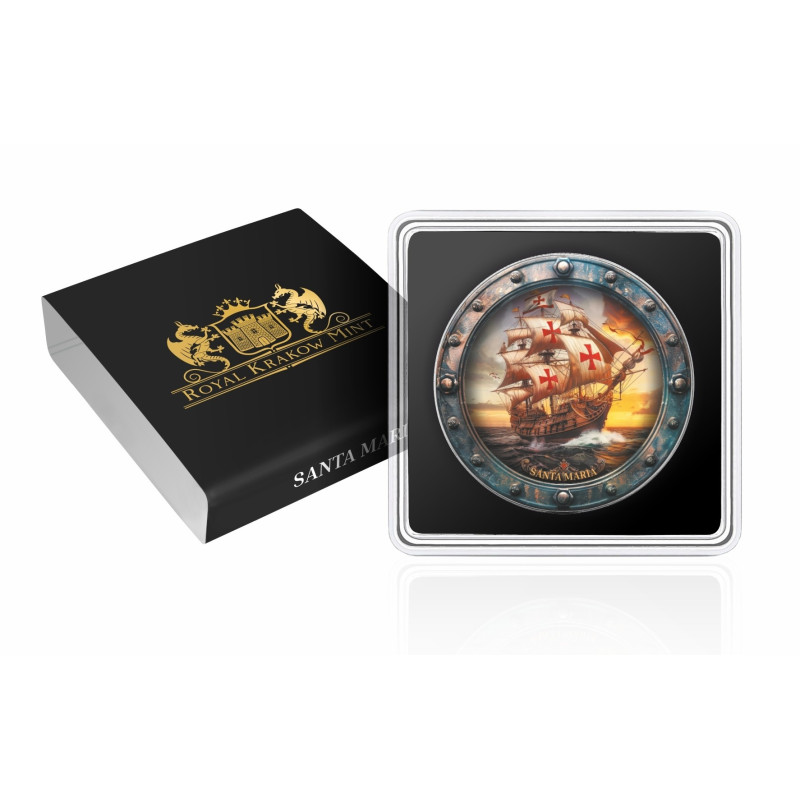
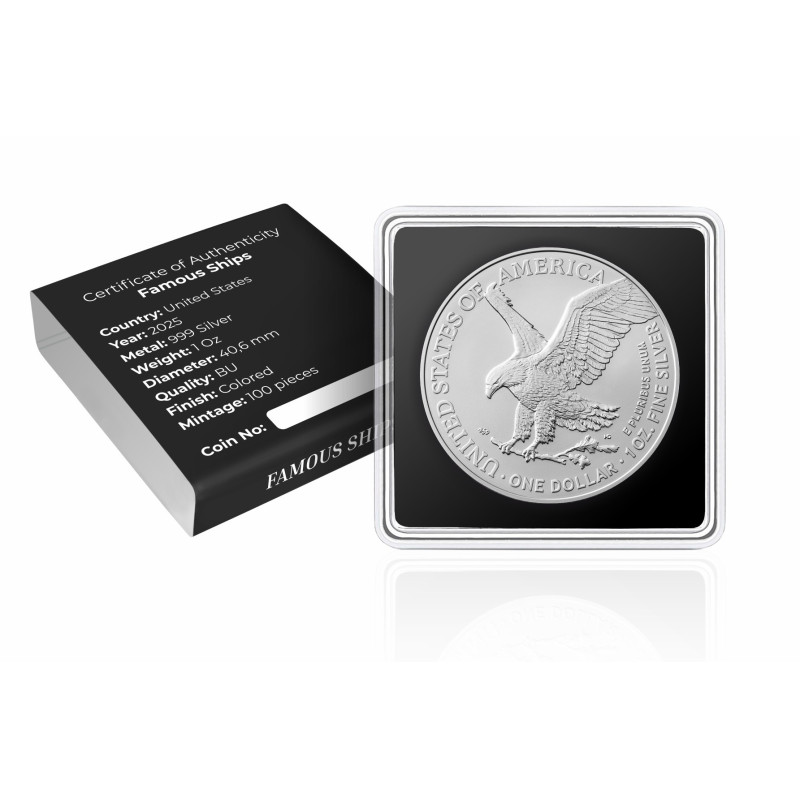
Columbus's flagship, 100 pieces
Santa Maria – Famous Ships of America
1 oz silver coin · USA 2025 · Royal Krakow Mint
★ Limited to 100 pieces worldwide
Doubloons and Pirates
For three centuries doubloons were an international trade currency, widely accepted in Europe and the Americas, and gold doubloons played a major part in the Spanish economy.
They crossed two oceans with silver and other commodities from every Spanish settlement in the Americas, and privateers tried to intercept each Spanish galleon en route to Seville, the only legal trading destination for American bullion until 1717. Pirates knew it.
Francis Drake's Golden Hind took the Cacafuego off Ecuador on March 1, 1579, finding gold aboard alongside chests of pieces of eight. It was the richest prize of his voyage around the world.

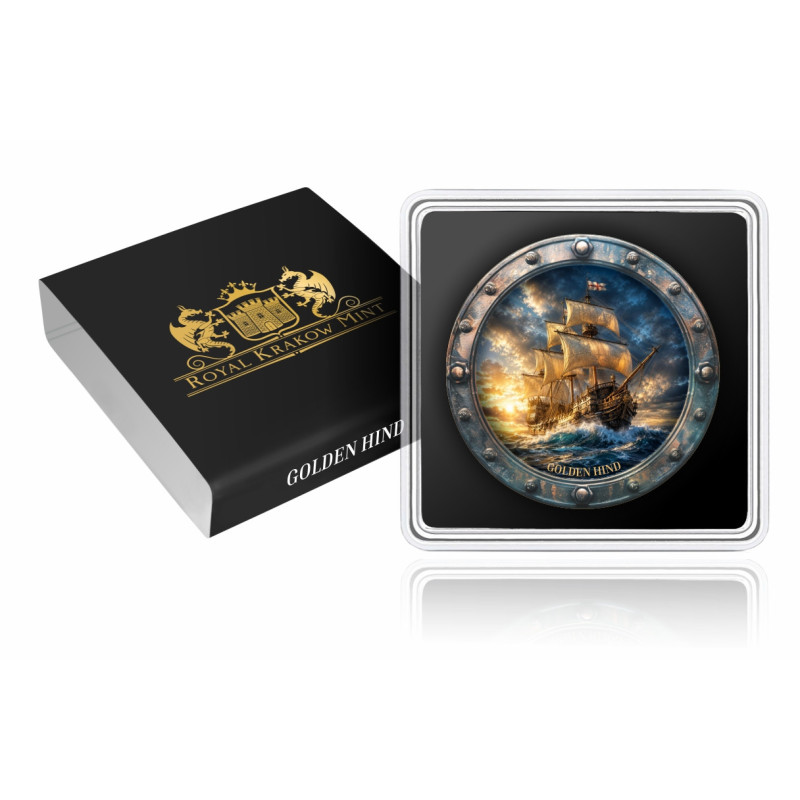
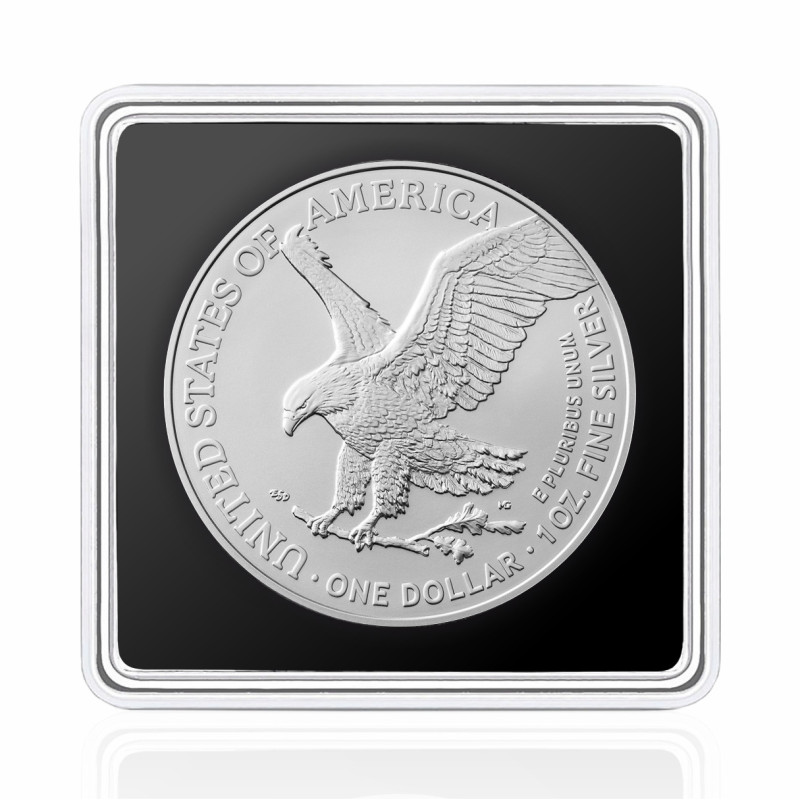
Drake's ship, release 10 of 10
Golden Hind – Famous Ships of America
1 oz silver coin · USA 2026 · Royal Krakow Mint
★ Limited to 100 pieces worldwide
On July 31, 1715, a hurricane wrecked the Spanish treasure fleet off Florida. In 1716 Henry Jennings raided the salvage camp on the beach, and the raid helped turn Nassau into a pirate base in the Golden Age era of piracy. After storms, pieces from that fleet still turn up in the sand and shells of Florida's Treasure Coast.
Blackbeard, Edward Teach, was killed at Ocracoke Inlet on November 22, 1718. Sunken pirate ships are rare finds: the Whydah, Sam Bellamy's ship, sank off Cape Cod in 1717 and was found in 1984.
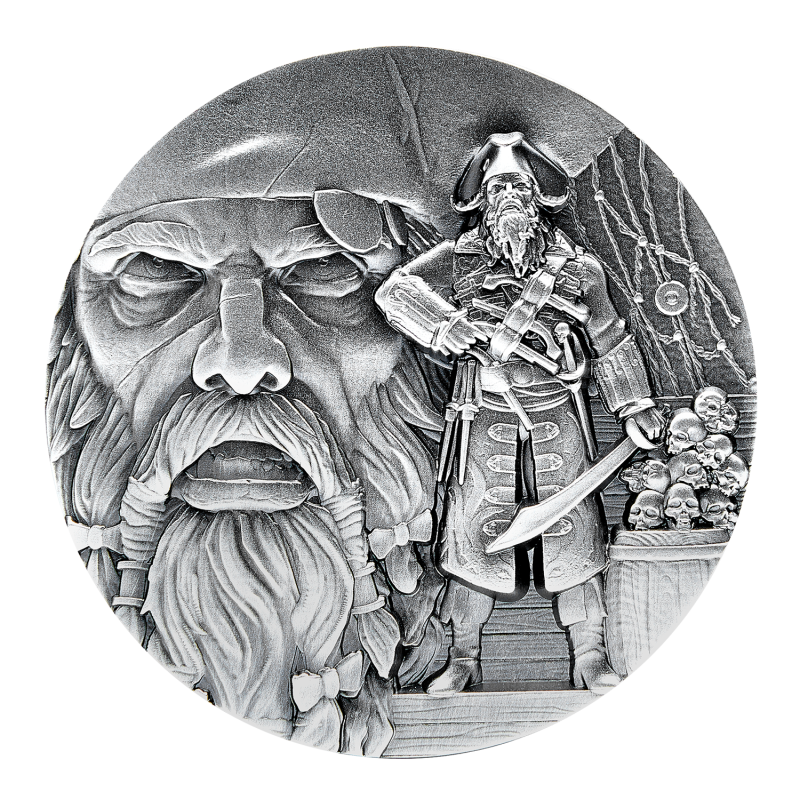
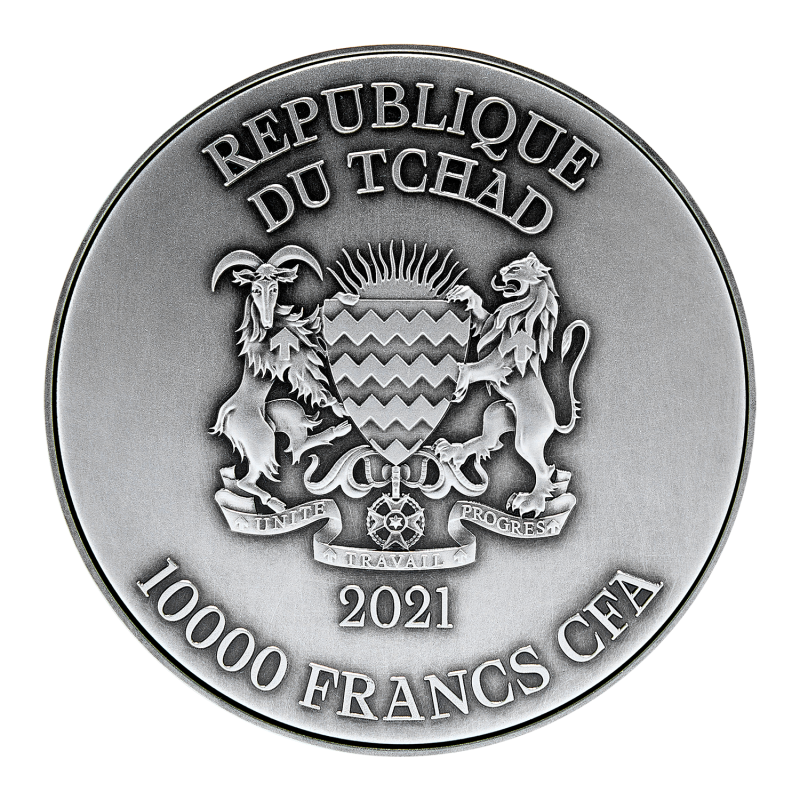
Blackbeard in 80 mm
Blackbeard
2 oz silver + 11.5 oz copper coin · Chad 2021
★ Limited to 888 pieces worldwide
Most people associate doubloons with buried treasure, but pirates spent their loot. William Kidd is the best-known exception: he buried gold on Gardiners Island in 1699, and the authorities dug it up. Films such as The Curse of the Black Pearl (2003) did the rest.
The Blackbeard piece also comes as Copper I and Copper II, each with a mintage of 888.
The Brasher Doubloon
Ephraim Brasher, a New York goldsmith, struck the 1787 Brasher doubloon in the young United States, before the US Mint existed, while asking the state for a copper contract. Seven are known. The finest, graded NGC MS65★, sold for $9.36 million in January 2021, as CoinWeek reported.
It's one of the most highly sought coins wanted by collectors.
Mardi Gras Doubloons
Mardi Gras doubloons are different: decorative aluminum tokens, not money. The Rex krewe threw the first ones in 1960, designed by artist H. Alvin Sharpe, and other krewes soon followed, as the Rex Organization recalls.
What Is a Gold Doubloon Worth?
Most surviving doubloons are 250 to 400 years old, and the metal alone is 0.76 to 0.80 troy oz, so even a worn one sells above its gold value. Mint, date, grade and history add the rest. Coins recovered from shipwrecks often come with a salvor's certificate, and NGC can name the wreck on its label, which adds value.
Certain types of doubloons are exceedingly rare and valuable: Spanish-struck examples are scarcer than Mexican or Lima examples. Condition is graded on the scale in our guide to NGC grading. Counterfeit doubloons exist in the market, so verification is essential: buy expensive pieces certified by NGC or PCGS.
Doubloons vs. Pieces of Eight
Both came from one system: the Spanish doubloon was the largest gold piece, the piece of eight the best-known Spanish coin in silver: the 8 reales. Their story, from cut money to the US dollar, is in our guide to pieces of eight.
About Magikos Coins
Magikos Coins is a collector coin shop from Kraków, Poland, selling limited-mintage coins since 2009. We don't offer historical doubloons; our ship and pirate coins are modern, from the Santa Maria to Blackbeard.
We buy straight from the mints and are an authorized distributor of the Mint of Poland, Germania Mint, Power Coin, MDM, AllCollect and MINT XXI.
Parcels go tracked worldwide, including to the US, with Global Express or FedEx, and in-stock coins are dispatched within 3 business days. You can pay in US dollars or euros with PayPal or a card.
Our feedback is 100% positive on eBay, Allegro and Catawiki, with an eBay score of 2,505 since 2009. Learn more about us.
FAQ: Doubloons
What is a doubloon?
A Spanish gold coin, struck from the 1530s to 1849. In English the word usually refers to the largest denomination.
What does doubloons mean?
The word comes from Spanish doble, "double", and dictionaries list several senses. Today it means old Spanish gold coins, Mardi Gras tokens or pirate-game currency.
Are gold doubloons real?
Yes. The Spanish crown struck them from the 1530s to 1849, and many survive from shipwrecks such as the 1715 Fleet.
How much is a gold doubloon worth?
At least its metal, 0.76 to 0.80 troy oz for the largest size. Rare mints, high grades and shipwreck provenance add far more.
What is the Brasher doubloon?
A 1787 coin by New York goldsmith Ephraim Brasher. Seven are known; the finest sold for $9.36 million in 2021.
How many pieces of eight is a doubloon?
Sixteen. One Spanish doubloon equaled 16 pieces of eight, about $16 in the American colonies.