
Ancient Greek Coins: History, Famous Coins and Value
Greek coins were among the first coins the Western world ever used, and some of the finest ever made. A silver owl from Athens or a tetradrachm of Alexander the Great still turns up at auction 2,400 years later, and the best ancient Greek coins sell for more than a house.
This guide is for anyone who has held one, inherited one or wants to understand what they're looking at.
We cover where Greek coinage came from, the main denominations, the symbols of the city states, the most famous examples and what they're worth, and how to identify a real ancient Greek coin.
We don't sell ancient coins ourselves; we sell modern collector coins with the same myths, like the ones in our Greek mythology silver coins, and we show a few of them at the end.
TL;DR
- Greek coinage began with electrum in the late 7th century BC; silver soon became the main metal of the Greek world.
- The main coins were the drachma (about 4.3 g in Athens), the tetradrachm of four drachmae, the stater and the small obol.
- Each city state put its own symbol on its coins: the owl of Athens, the Pegasus of Corinth, the turtle of Aegina.
- Values run from under $100 for worn bronze to a record of about $6 million for a gold stater of Panticapaeum.
- Check the weight and the style, buy from reputable dealers and never clean an ancient coin.
What Are Ancient Greek Coins?
Ancient Greek coins are the coins struck by Greek cities and kingdoms from the late 7th century BC until the Roman empire absorbed them. Before coins, trade ran on barter and weighed metal, with no real currency. Coins fixed the weight and put a stamp on it, and the cumbersome barter system faded.
The Greek world was much bigger than Greece. Greek colonization spread cities from the Black Sea region to Sicily, southern Italy and the coast of Egypt, and almost every city minted its own coins.
That's why there are thousands of different coin types, coins produced by other cities across three continents, and why a coin found in Ukraine can be as Greek as one from Athens.
Metals and Denominations of Greek Coinage
The first coins were electrum, a natural alloy of gold and silver, struck in western Asia Minor. Silver coins soon took over and carried most of the value; bronze covered small change from the 5th century BC on, and gold was rare until the kings of Macedonia struck it in quantity.
The drachma was the basic unit. On the Attic standard used by Athens it weighed about 4.3 grams, so the great tetradrachm, four drachmae, weighed about 17.2 grams. Six obols made a drachma.
The stater was the name for the main coin of a city, and its weight changed from one standard to another. At the top end, Syracuse struck decadrachms of ten drachmae, 42 to 43 grams of silver.
Gold went further still. The largest gold coin of antiquity is a 20-stater of Eucratides I of Bactria, struck between about 170 and 145 BC: 169.2 grams of gold, now in Paris.
The smallest coins had a role of their own. Greeks placed an obol with the dead as Charon's fare across to the underworld, and coins appear in Greek graves by the 5th century BC, though only in about 5 to 10 percent of known burials.
Greek Coins by Period
Archaic period
Archaic coins, before about 480 BC, carry simple animals and a rough punch mark on the other side. Aegina was the first city in Greece to strike silver, around 550 BC, with a sea turtle; after 404 BC the turtle became a land tortoise.
Classical period
The classical period brought realistic detail and the best engraving Greek coins ever reached. Engravers at Syracuse, like Kimon and Euainetos, signed their dies, and their decadrachms with the nymph Arethusa and a racing chariot are among the most highly prized coins in the world, true masterpieces of the engraver's art.
Hellenistic period
In the Hellenistic era, after Alexander the Great, rulers put their own portraits on coins instead of only gods. Alexander, who reigned from 336 to 323 BC, standardized coinage across his empire, and his successors in Egypt, Syria and Macedonia kept striking his types for centuries.
The Bosporan kingdom on the Black Sea, the Greco-Bactrian kings in Central Asia and the Ptolemies in Egypt all produced Hellenistic coins that collectors now hunt for, bearing portraits of rulers who rose to power after Alexander.
Symbols of the Greek City States
A Greek coin was a city's signature, and the animal depicted on it told you where it came from. Athens put the helmeted head of Athena on the obverse and her owl on the reverse, with the letters ΑΘΕ for the city; the owl was accepted across the Mediterranean. Not sure which side is which? See obverse and reverse.
Corinth used the winged horse Pegasus. Aegina used its turtle. Syracuse surrounded the head of Arethusa with dolphins. Elis, which ran the Olympic games, struck its coins at Olympia with the eagle of Zeus.
Inscriptions identified the issuing city or ruler, and the symbols did the rest for people who couldn't read. Historians still use them to date coins and map trade networks, so each coin works as a small historical archive, and that historical importance is part of what collectors pay for. Greek culture traveled on these coins.
Gods and Mythological Figures on Greek Coins
Most Greek coins show deities, one of the heroes or a creature from myth. A handful of motifs appears again and again. Alexander's tetradrachm puts a young Heracles in a lion skin on the obverse and Zeus seated on a throne, holding an eagle, on the reverse.
Apollo, Dionysus, Poseidon and the Gorgon Medusa all appear on city coinage. You'll find the stories behind them in our guides to the Greek gods and to Medusa and Perseus.
Famous Ancient Greek Coins
A few coins stand above the rest. The most notable examples:
- Gold stater of Panticapaeum. A gold coin of the Bosporan city with the head of a satyr, sold by the Hermitage in 1934. It fetched 5.39 million Swiss francs, about $6 million, at Numismatica Ars Classica in Zurich in May 2023, a record for an ancient coin.
- Decadrachms of Syracuse. Signed by Kimon or Euainetos, 42 to 43 grams; the finest are virtually priceless.
- Tetradrachm of Aetna. Struck in Sicily between 476 and 461 BC; one dealer calls it the "Mona Lisa of numismatics".
- Tetradrachm of Agrigento. Struck from 409 to 406 BC, rated R3 for rarity with fewer than 1,000 known; one sold for 22,000 euros in 2011.
- Eucratides 20-stater. The largest gold coin of antiquity, 169.2 grams.
How Much Are Ancient Greek Coins Worth?
Anywhere from under $100 to millions. A worn bronze from a common city is a cheap way to hold real Greek history; a well-preserved Athenian owl or an Alexander tetradrachm costs thousands, and one Alexander tetradrachm sold for 17,000 euros.
Rarity drives the price most, then condition, the quality of the strike and the style, and finally provenance, the documented history of who owned the coin. We don't predict prices.
How to Identify Ancient Coins From Greece
Start with what you can measure. A tetradrachm on the Attic standard should weigh close to 17 grams; a coin far off its standard is a warning sign. Then compare the symbols, the inscription and the style with published examples from the same city, in catalogues or museum collections online.
Fakes are as old as the coins. Ancient forgers made silver-plated copies with a bronze core, and modern ones cast or strike copies that look right in photos.
Buy from reputable dealers who guarantee authenticity, or choose coins certified by a grading service such as NGC, which grades ancient coins. Never clean an ancient coin to see it better; our guide on how to clean silver coins explains why.
Greek Mythology on Modern Silver Coins
If you love the designs but not the price or the authenticity risk, modern mints still strike the same myths, in .999 silver with a stated mintage and a certificate. The Mint of Poland's Twelve Labours of Hercules series carries the same hero as Alexander's tetradrachm.

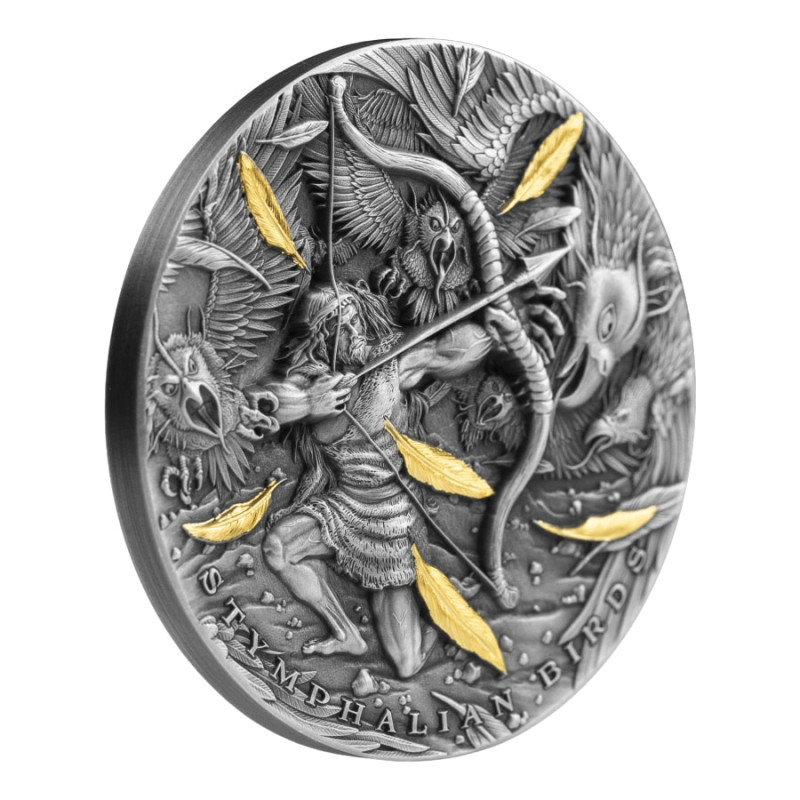
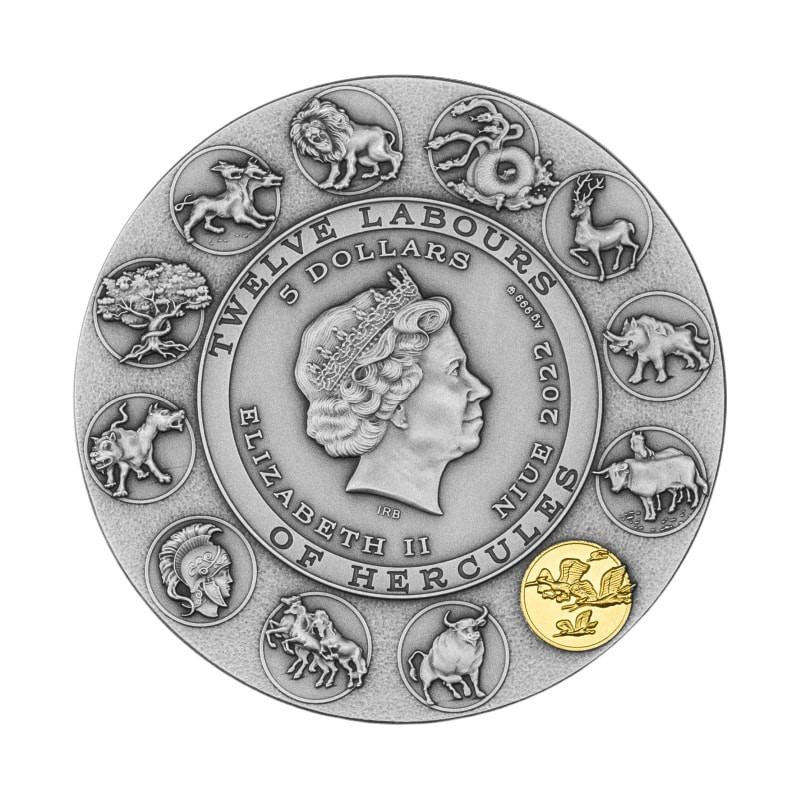
Heracles, as on Alexander’s tetradrachm
Stymphalian Birds – Twelve Labours of Hercules
2 oz silver coin · Niue 2022 · Mint of Poland
★ Limited to 500 pieces worldwide
Perseus with the head of Medusa, the Gorgon on so many ancient city coins, comes in 2 oz of high relief silver.
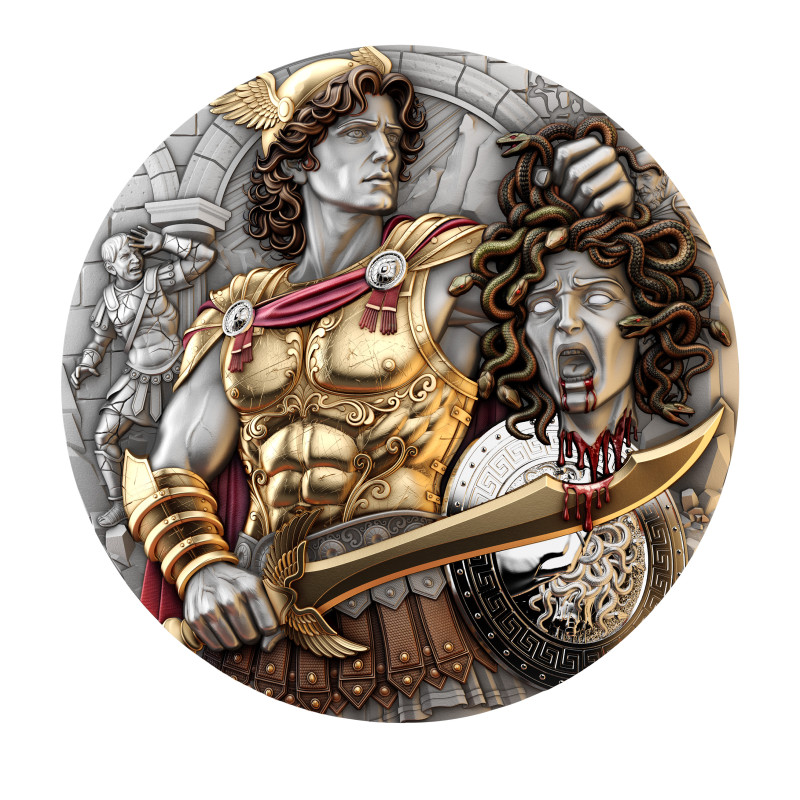
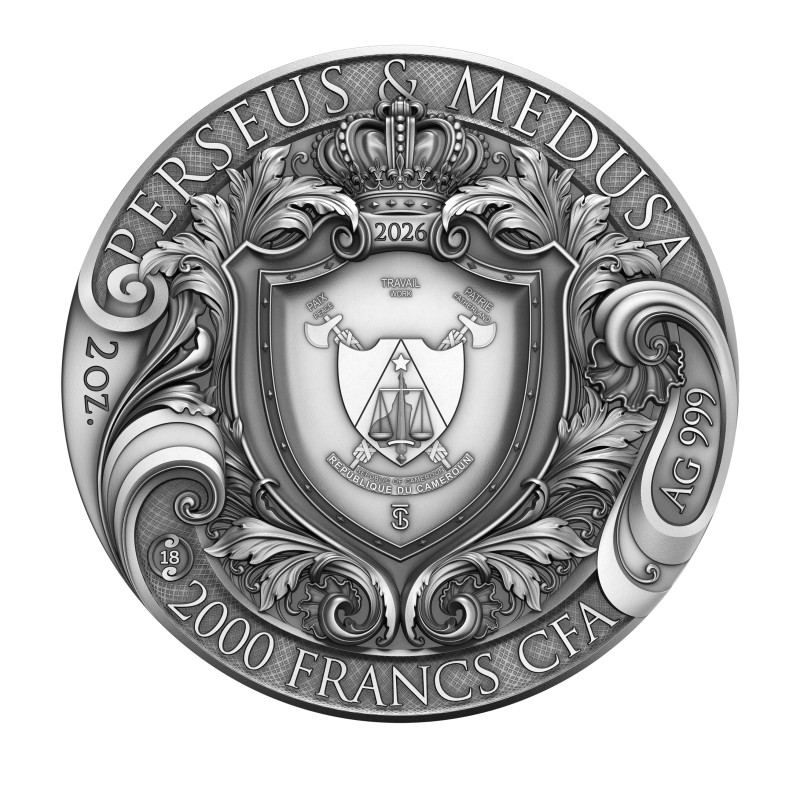
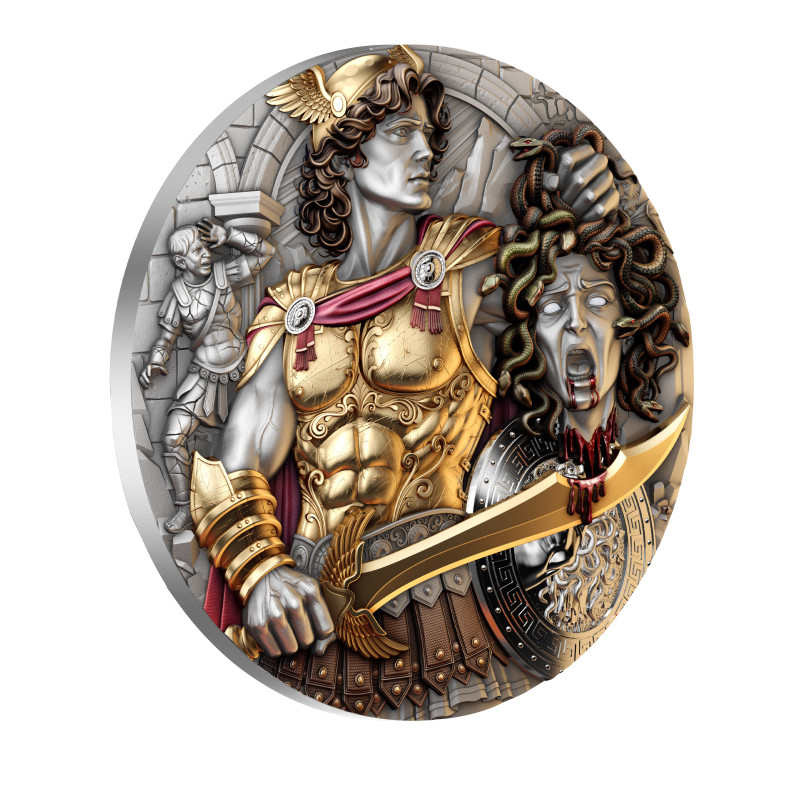
Medusa, as on ancient city coins
Perseus & Medusa
2 oz silver coin · Cameroon 2026 · T&S Coin
Available for pre-order – allow for the release date.
Pre-order this coin →★ Limited to 500 pieces worldwide
And the Trojan War, which Greek coins told only in small details, fills a 5 oz proof coin.

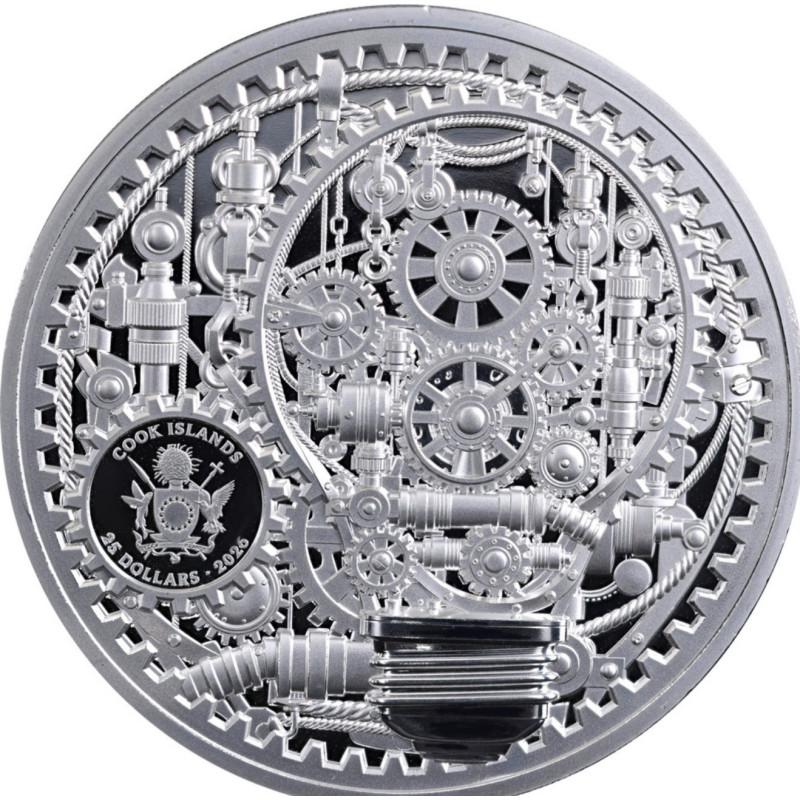
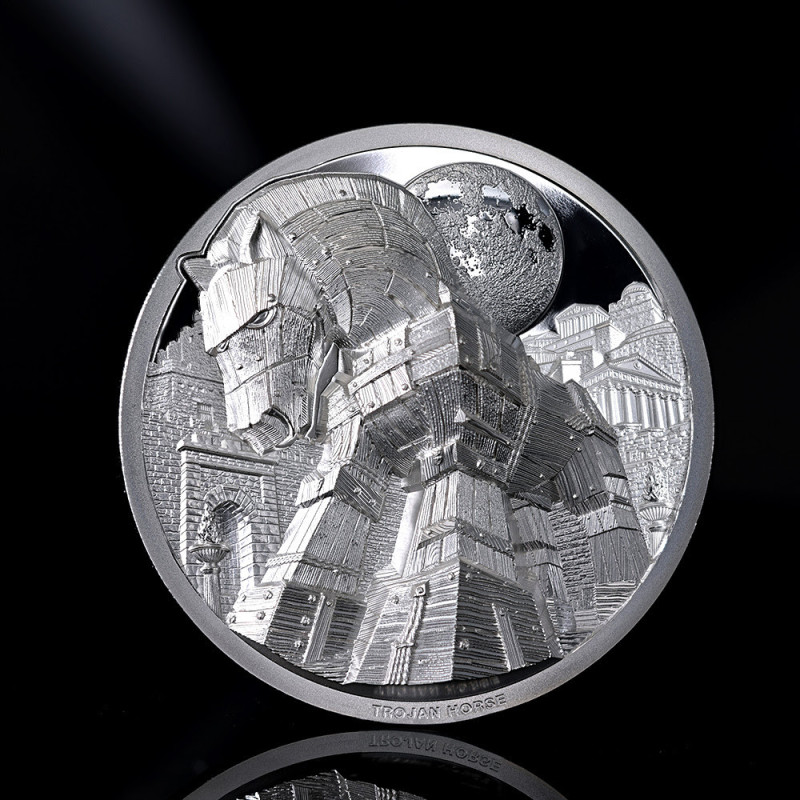
The Trojan War in 5 oz of silver
Trojan Horse
5 oz silver coin · Cook Islands 2026
Available for pre-order – allow for the release date.
Pre-order this coin →★ Limited to 499 pieces worldwide
About Magikos Coins
Magikos Coins is a collector coin shop from Kraków, Poland, selling limited-mintage silver and gold coins since 2009.
We don't deal in ancient coins; we sell modern coins with Greek, Norse and Egyptian myths, many in high relief and antique finish, and we buy them straight from the mints. We're an authorized distributor of the Mint of Poland, Germania Mint, Power Coin, MDM, AllCollect and MINT XXI.
Parcels go tracked worldwide, including to the US, with Global Express or FedEx, and you can pay in US dollars or euros with PayPal or a card. Our feedback is 100% positive on eBay, Allegro and Catawiki, with an eBay score of 2,505 since 2009. Learn more about us.
FAQ: Ancient Greek Coins
What was the main Greek coin called?
The drachma. In Athens it weighed about 4.3 grams of silver; the tetradrachm was worth four drachmae and the obol a sixth of one.
What is the most famous ancient Greek coin?
The silver owl tetradrachm of Athens, with Athena on one side and her owl on the other. It was accepted across the Mediterranean and is still the coin most people picture.
How much is an ancient Greek coin worth?
From under $100 for a worn bronze to thousands for a good Athenian owl or Alexander tetradrachm. Rarity, condition and provenance set the price.
What is the most expensive ancient Greek coin?
A gold stater of Panticapaeum, sold for 5.39 million Swiss francs, about $6 million, in Zurich in May 2023.
How can I tell if an ancient Greek coin is real?
Check the weight against the coin's standard, compare the style and inscription with published examples, and buy from a reputable dealer or choose a coin certified by a grading service. Cast fakes often show soft details and a grainy surface.
Does Magikos Coins sell ancient Greek coins?
No. We sell modern collector coins with Greek mythology themes, in .999 silver with a certificate and a stated mintage.