
Pirate Coin Guide: Real Pirate and Shipwreck Coins
In films, every pirate coin is gold and stamped with a skull. Real pirates would have been confused. No mint ever struck a coin for pirates; they spent whatever silver and gold they took at sea, and most of it was Spanish.
This guide is for collectors and for anyone holding a coin offered as pirate gold: what pirates really carried, the few coins tied to them, wreck finds and modern coins from our maritime coins collection.
TL;DR
- No coin was ever struck for pirates. Pirates spent whatever silver or gold they captured.
- Most of it was Spanish: pieces of eight in silver, escudos (doubloons) in gold.
- Coins tied to pirates for certain are rare: the Whydah wreck of 1717 and Arabian silver linked to Henry Every.
- Atocha shipwreck coins come from a Spanish galleon lost in 1622, not from pirates.
- Modern silver coins with pirate designs are new collector coins, not old money.
What Is a Pirate Coin?
A pirate coin is any coin that passed through pirate hands. Collectors use the term for real or replica Spanish colonial coins from the Golden Age of Piracy. Pirates had no money of their own; they spent their loot in ports that asked few questions, such as Nassau or Port Royal.
The coin pirates met most often was Spanish. Spain's American mints, from Mexico City to Potosí, struck silver by the ton. Spanish coins dominated trade in the colonial ports of the Spanish Empire and beyond: up to half of the coins circulating in the English colonies were Spanish reales, as CoinWeek notes.
The silver 8 reales, also called the Spanish dollar, is the coin Long John Silver's parrot screams about in Treasure Island (1883). Its story is in our guide to pieces of eight. The gold escudo, the coin pirates dreamed about, is covered in our article on doubloons. A doubloon of 2 escudos was worth 32 reales.
Coins Pirates Actually Carried
Pirates took what each victim carried, so their chests mixed coins from half the world. For pirates, silver was common; gold was rarer and easier to hide.
| Coin | Metal | Struck in | Where pirates met it |
|---|---|---|---|
| 8 reales (piece of eight) | silver | Mexico City, Lima, Potosí | Spanish galleons, the Caribbean, the colonies |
| 2 to 8 escudos (doubloons) | gold | Spain, Bogotá, Lima, Mexico City | the Spanish fleets to Seville |
| Lion dollar (leeuwendaalder) | silver | Dutch Republic | trade in the colonies |
| Guinea | gold | England | English ports |
| Louis d'or | gold | France | French merchantmen |
| Rupee and Arabian silver | silver, gold | Mughal India, Yemen | the Red Sea and the Indian Ocean |
Early Spanish silver came as hand-cut cobs, first struck at Potosí under Philip II in the 1570s, each with a mint mark and the assayer's initial. Pillar dollars, machine-milled in Mexico City from 1732, came after the pirate era, and later gold doubloons carry the king's portrait in profile.
Coins With a Pirate Paper Trail
A Spanish coin from 1700 could have belonged to a pirate or a merchant, and without a find spot nobody can tell.
The best proof comes from the Whydah, a slave ship from the Africa trade that Sam Bellamy captured in 1717. It sank off Cape Cod that April with most of his crew.
Barry Clifford's team found the wreck in 1984 and recovered the bell marked "THE WHYDAH GALLY 1716" in 1985. The silver and gold coins recovered from it belonged to pirates beyond doubt.
The second case is newer. In 1695 Henry Every captured the Ganj-i-Sawai, a vessel of the Mughal emperor Aurangzeb, and vanished. In 2014 Jim Bailey dug up a silver coin struck in Yemen in 1693 on a farm in Middletown, Rhode Island.
Fifteen more Arabian coins of that era have turned up since: ten in Massachusetts, three in Rhode Island and two in Connecticut, as CBS News reported. Bailey reads them as evidence that Every's men hid in the American colonies.
Pirates of the Golden Age
The Golden Age of piracy ran from about 1714 to the mid-1720s, when most Spanish coins bore the name of Philip V. Its biggest haul came from a disaster: after a hurricane sank the Spanish treasure fleet off Florida in 1715, Henry Jennings and John Wills raided the salvage camp and took about 120,000 pieces of eight.
Edward Teach, known as Blackbeard, ruled the Carolinas coast in 1718 and blockaded Charleston for about a week. He was killed at Ocracoke Inlet that November.
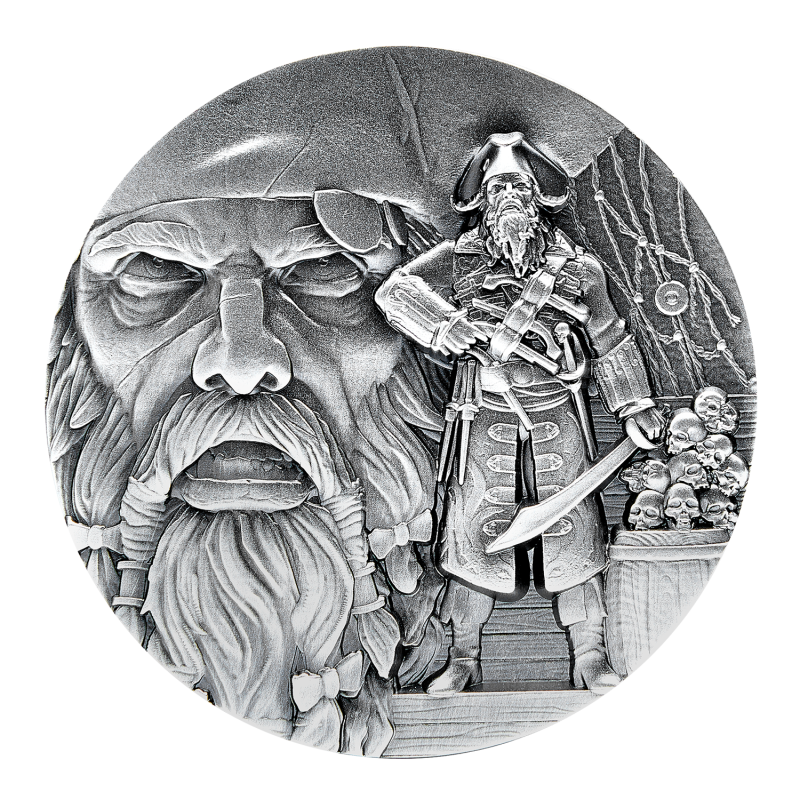
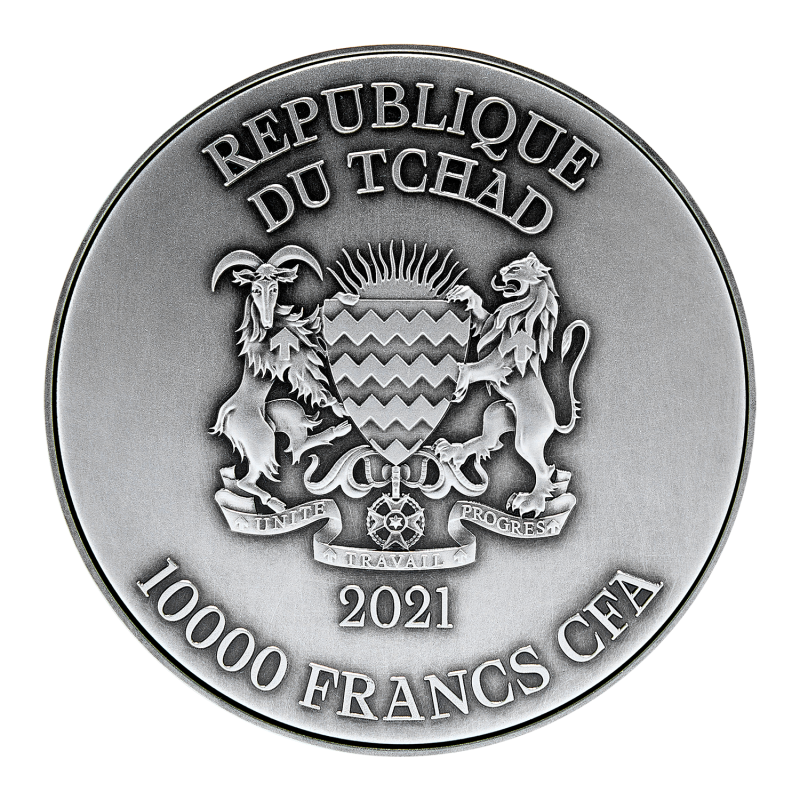
Blackbeard in 80 mm
Blackbeard
2 oz silver + 11.5 oz copper coin · Chad 2021
★ Limited to 888 pieces worldwide
The Blackbeard piece also comes as Copper I and Copper II, each with a mintage of 888.
Shipwreck Coins: Atocha and the 1715 Fleet
Most coins offered as "pirate gold" are really shipwreck coins from Spanish treasure galleons that storms sank, not pirates. Two wrecks off Florida are the best known sources of Spanish shipwreck coins.
The Nuestra Señora de Atocha sank in a hurricane in the Straits of Florida, off the Keys, in 1622. Her manifest listed about 255,000 silver coins of every denomination from Potosí and other mints. Mel Fisher's company, Treasure Salvors, found the main pile in July 1985, a discovery that also recovered gold bars and emerald jewels.
Atocha shipwreck coins are hand-cut cobs in denominations from ¼ to 8 reales, each a slightly different shape, struck under Philip III and Philip IV. The most common are Potosí 8 reales with the assayer's initial T or Q. Few gold coins were recovered, and they were struck in Spain, according to the American Numismatic Association.
The 1715 Fleet sank between Sebastian and Fort Pierce, a stretch now called the Treasure Coast. Its coins still wash up after storms, where treasure hunters search the beaches with metal detectors, and salvage crews licensed by the state of Florida recover coins and other artifacts from the wrecks.
How to Tell a Real Shipwreck Coin From a Replica
Pirate replicas are usually pewter or plated brass, made as props and costume pieces. A real shipwreck coin is silver or gold, weighs what its type should weigh and comes with a history you can check.
Ask for the salvor's certificate, which names the wreck. Better still, buy it graded. NGC uses a Shipwreck Effect designation for sea damage instead of a numeric grade, and adds the wreck's name when its origin is documented, as its shipwreck certification page explains.
A well-preserved coin with a documented wreck or pirate history is worth a clear premium over a plain coin of the same type.
Gold survives salt water far better than silver, so gold coins from wrecks often get normal grades. How those grades work is in our guide to NGC grading.
Modern Silver Pirate Coins
Modern silver pirate coins tell the story without the price of a 300-year-old cob, often with a skull and crossbones or a captain's portrait. Numismatists keep them apart from historical coins: they're legal tender, with a stated mintage and a certificate.
Francis Drake was a hero in England and a pirate to the Spanish. His Golden Hind took the Spanish ship Cacafuego off Ecuador in 1579, the richest prize of his voyage around the world.

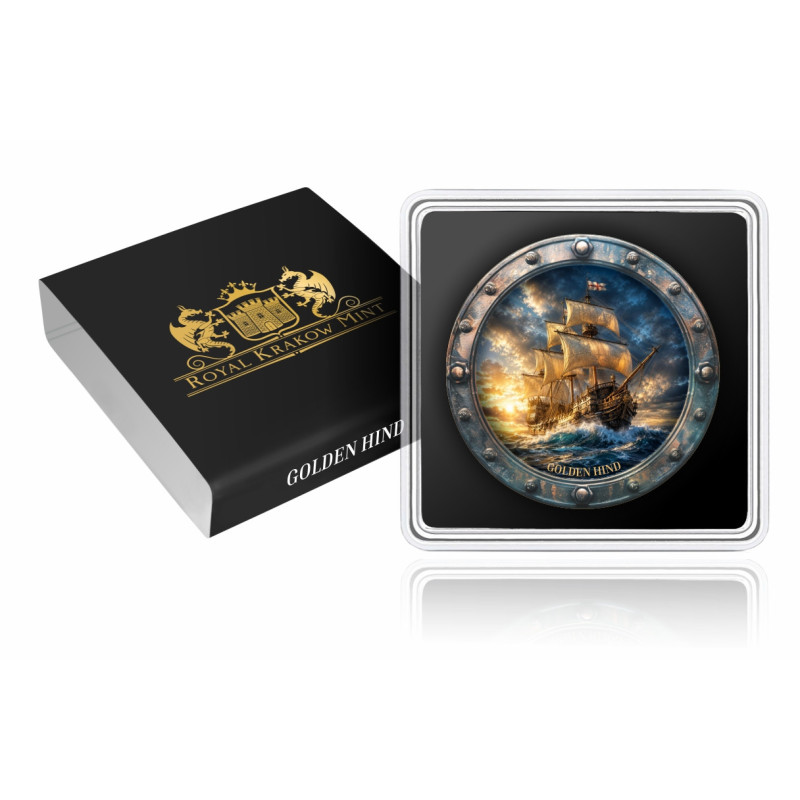
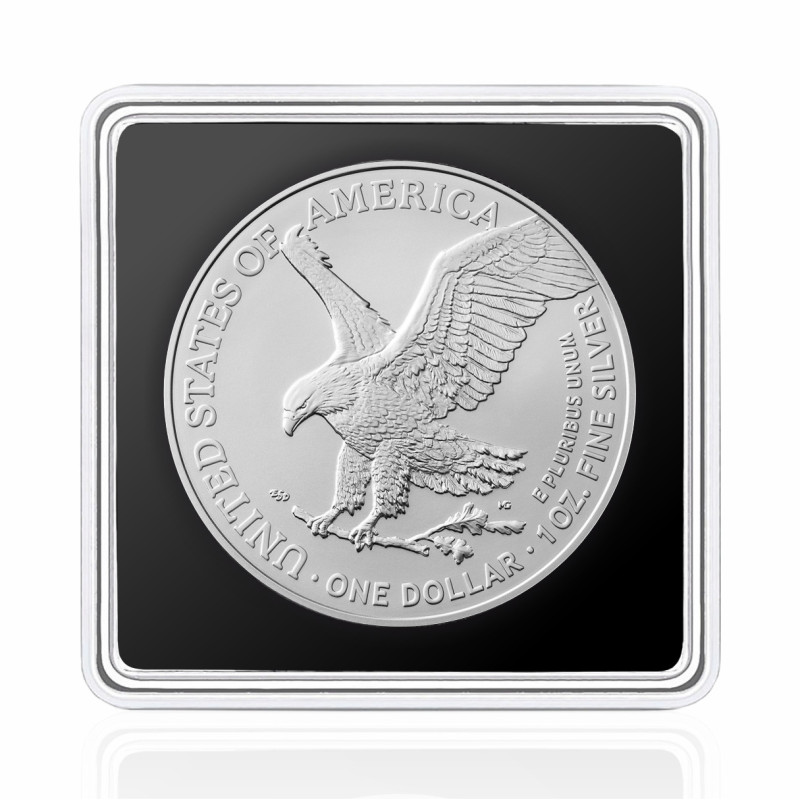
Drake's ship, release 10 of 10
Golden Hind – Famous Ships of America
1 oz silver coin · USA 2026 · Royal Krakow Mint
★ Limited to 100 pieces worldwide
The Golden Hind is the tenth and final release of the Famous Ships of America series from the Royal Krakow Mint, 100 pieces per ship. Two more sailing ships of the series are in stock: the Santa Maria and the Mayflower.
The rest of the series is sold out: Nelson's HMS Victory, the RMS Titanic, the battleships Bismarck and Yamato, the carrier USS Enterprise and the submarine USS Nautilus.
Pirates also faced warships. The USS Constitution sailed as flagship of Edward Preble's squadron against the Barbary pirates of Tripoli from August 1803, according to the US Navy.

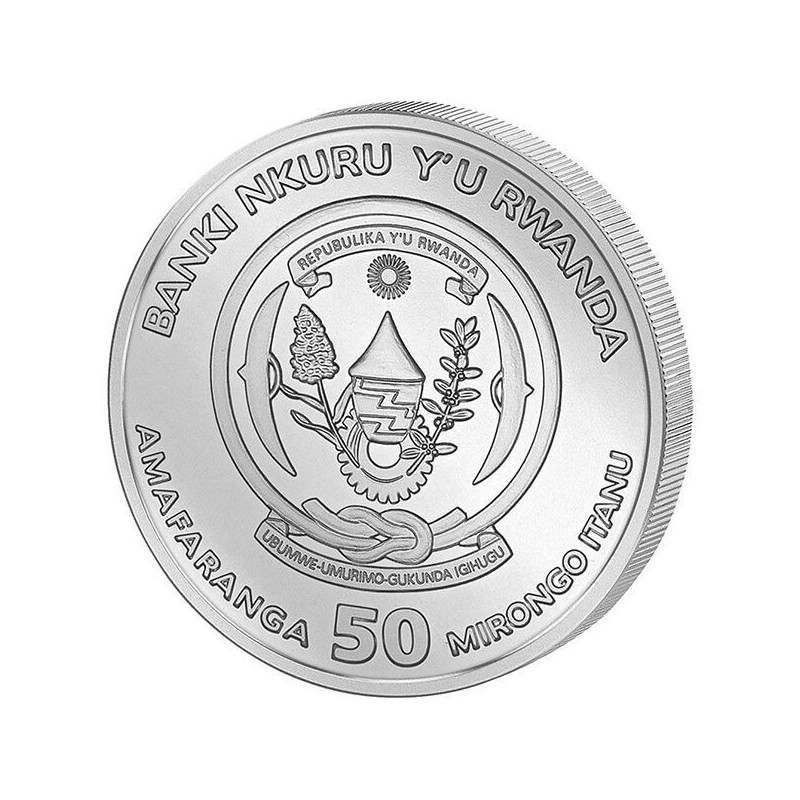
Proof, 1,000 pieces
USS Constitution – Nautical Ounce
1 oz proof silver coin · Rwanda 2023
★ Limited to 1,000 pieces worldwide
Raiders from the sea are older than the Caribbean, too. Our Viking coins include ship-shaped coins from the Sail with the Vikings series.
About Magikos Coins
Magikos Coins is a collector coin shop from Kraków, Poland, selling limited-mintage coins since 2009. We don't sell historical pirate-era coins; our pirate and ship coins are modern, from Blackbeard to the USS Constitution.
We buy straight from the mints and are an authorized distributor of the Mint of Poland, Germania Mint, Power Coin, MDM, AllCollect and MINT XXI.
Parcels go tracked worldwide, including to the US, with Global Express or FedEx, and in-stock coins are dispatched within 3 business days. You can pay in US dollars or euros with PayPal or a card.
Our feedback is 100% positive on eBay, Allegro and Catawiki, with an eBay score of 2,505 since 2009. Learn more about us.
FAQ: Pirate Coins
What is a pirate coin?
Any coin pirates captured and spent. No mint made coins for pirates; most of their loot was Spanish silver 8 reales and gold escudos.
Are real pirate coins for sale?
Coins of the pirate era are, and coins from the Whydah wreck are the only ones with certain pirate provenance. Most coins offered as pirate loot are Spanish shipwreck coins.
What are Atocha shipwreck coins?
Silver cobs and a few gold coins from the Nuestra Señora de Atocha, a Spanish galleon lost off the Florida Keys in 1622 and found by Mel Fisher's crew in 1985.
How can I tell if a shipwreck coin is real?
Check the metal and weight, ask for the salvor's certificate and prefer coins certified by NGC, which notes sea damage and names the wreck.
Did pirates bury their coins?
Rarely. Most pirates spent their loot fast. William Kidd buried gold on Gardiners Island in 1699, and the authorities dug it up.