
Pieces of Eight: The Spanish Silver Coin Pirates Wanted
Pieces of eight were Spanish silver coins worth eight reales, struck in Spain's American mints from the 1500s to the 1800s. Pirates wanted them, but so did every merchant from Boston to Canton.
Long John Silver's parrot made the phrase famous in 1883. By then the coin had served as the world's first global currency for three centuries, and it gave the United States its dollar.
This guide covers what a piece of eight is, how the three main types differ, the pirate story and what a Spanish piece of eight is worth today. Along the way we show four ship coins from our maritime coins collection.
TL;DR
- A piece of eight is the Spanish 8 reales silver coin, also called the Spanish dollar.
- A milled 8 reales weighs 27.07 g, .917 or .903 fine, about 0.79 troy oz of pure silver.
- Collectors know three types: hand-struck cobs, pillar dollars (from 1732) and portrait dollars (from 1772).
- The Spanish dollar was legal tender in the US until the Coinage Act of 1857.
- Worn common pieces sell for little above their silver; rare dates and shipwreck finds with a known history sell for far more.
What Is a Piece of Eight?
A piece of eight is a large Spanish colonial silver coin, about 39 mm across, worth eight reales, the real being Spain's basic unit of money. Locally it was the real de a ocho or peso de ocho reales; the British called it the Spanish dollar.
The name is arithmetic: one coin equaled eight single reales. A popular explanation says the term refers to cutting the coin into eight bits; people did cut them into eight pieces for change, but the name comes from the value. Smaller coins of 4, 2, 1 and 1/2 real were struck alongside it.
The gold pieces of the same system were escudos, and the largest of them is the doubloon. Each coin names the Spanish monarch, from Charles I and Joanna to Ferdinand VII, and carries a mint mark and the assayer's initials, so you can tell where and under which king it was struck.
Most of the silver came from the Americas. Cerro Rico, the "rich hill" of Potosí in today's Bolivia, was found in 1545. Mexican mines added more. Spanish dollars were also minted in Potosí, Bolivia, and with Mexico City and Lima it turned the metal into money by the million.
Cobs, Pillar Dollars and Portrait Dollars
A piece of eight from 1650 and one from 1790 look like money from two different countries. Collectors sort them into three types.
| Type | Struck | What it looks like |
|---|---|---|
| Cob | 1500s to the mid-1700s (Potosí until the 1770s) | Hand-hammered, irregular shape, often only part of the design visible; reading the date can be impossible |
| Pillar dollar | Mexico City from 1732, other mints later | Round, machine-struck; two globes between the Pillars of Hercules; 27.07 g, .917 silver |
| Portrait dollar | From 1772 | Image of the Spanish king; 27.07 g, .903 silver |
Cobs were cut from bars and struck by hand. The weight had to be right, and the shape didn't matter, so many cobs look like flattened lumps with a cross on one side and the Spanish coat of arms on the other.
In 1732 Mexico City switched to a screw press and a round, milled coin with an edge design. The edge design prevented dishonest traders from shaving slivers of metal off the coin unnoticed. Lima, Guatemala and Potosí followed decades later.
It was one of the most stable coins in the Western world, and merchants trusted it because its standard barely moved. It weighed about 27 g for over two centuries, and Philip V's reform of 1728 and a second cut in 1772 lowered the fineness only from about .931 to .903.

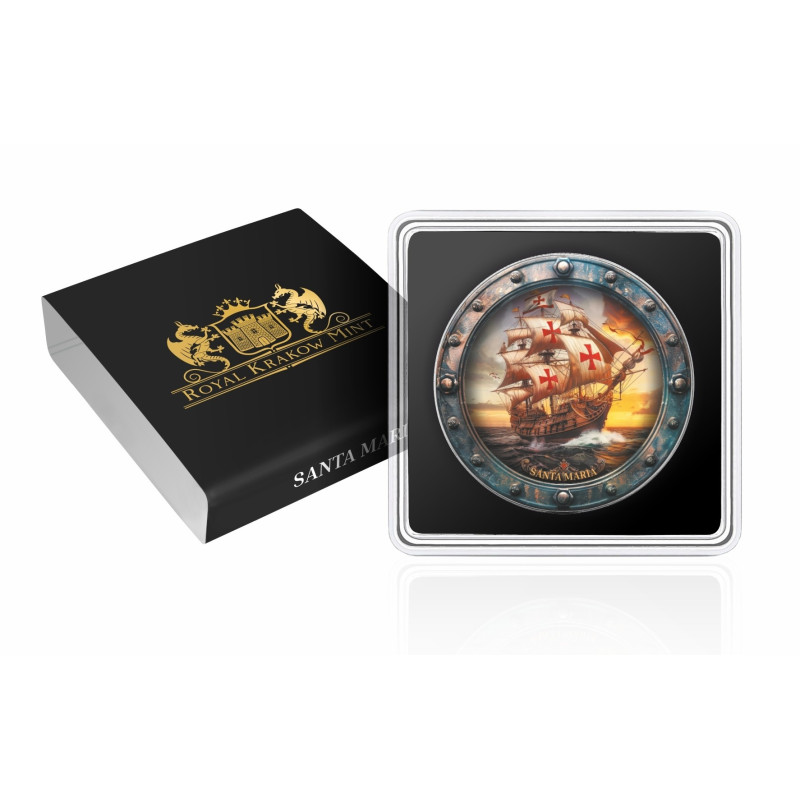
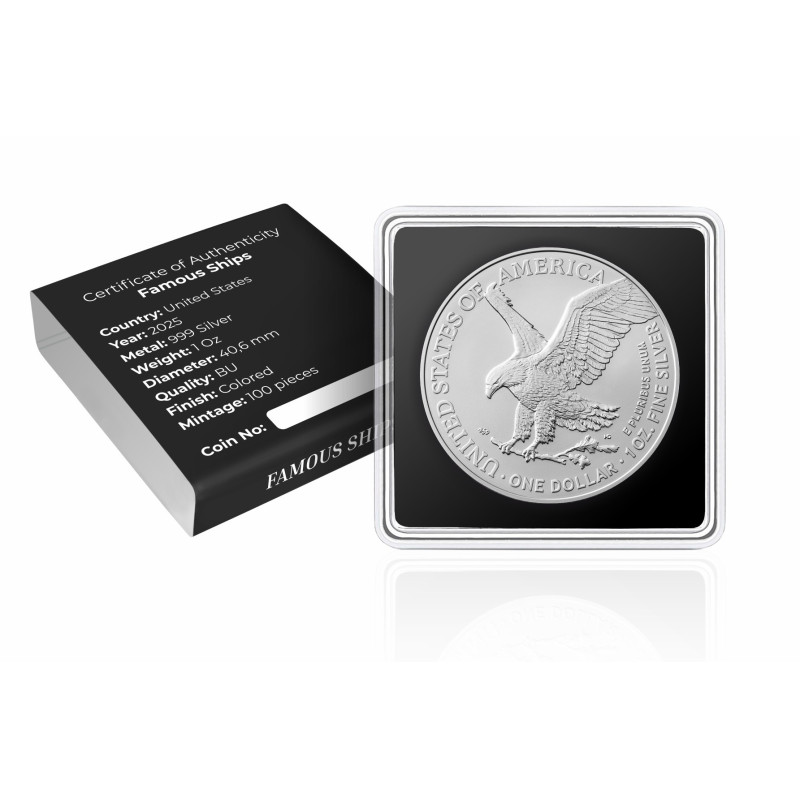
Columbus's flagship, 100 pieces
Santa Maria – Famous Ships of America
1 oz silver coin · USA 2025 · Royal Krakow Mint
★ Limited to 100 pieces worldwide
Pieces of Eight and Pirates
Spain shipped its silver from the New World to the Old World in convoys. Ships carried it from Peru up the Pacific coast, mules carried it across Panama, and the treasure fleets crossed the Atlantic from Havana. Every leg of that route drew raiders.
The most famous capture came on March 1, 1579. Francis Drake's Golden Hind caught the vessel Nuestra Señora de la Concepción, nicknamed Cacafuego, off the coast of Ecuador. Accounts list chests of money, bars and gold. Drake sailed on around the world and reached Plymouth in September 1580.

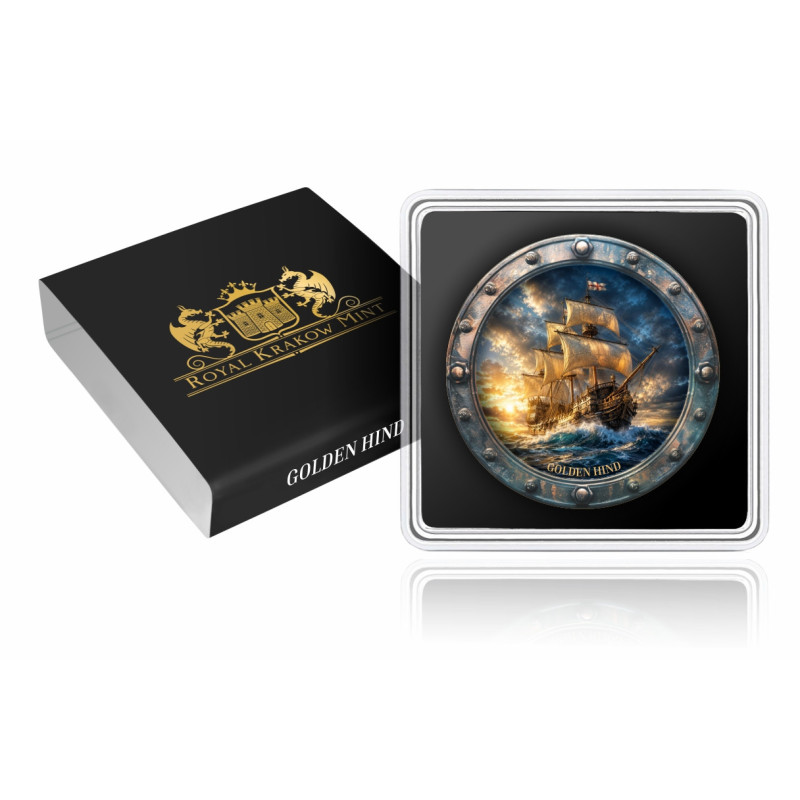
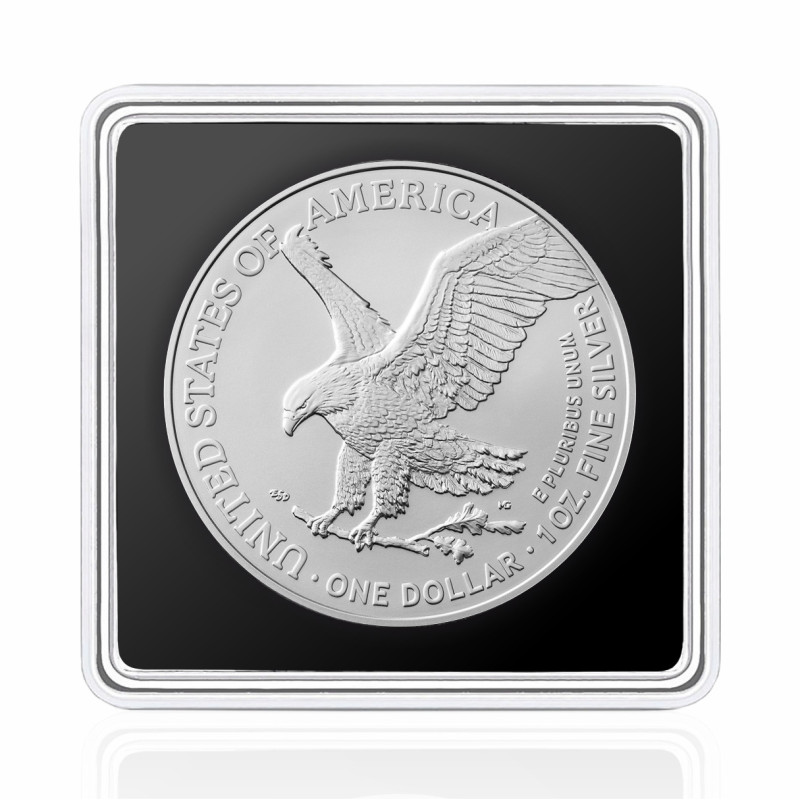
Drake's ship, release 10 of 10
Golden Hind – Famous Ships of America
1 oz silver coin · USA 2026 · Royal Krakow Mint
★ Limited to 100 pieces worldwide
Pirates did take them, but far less than the legend suggests. In fact, a New York Fed history piece quotes the BBC: only "infinitesimal quantities" ever fell into pirate hands.
Storms were the other danger. The Nuestra Señora de Atocha went down off the Florida Keys in 1622. Mel Fisher's team found the main pile of its cargo on July 20, 1985, after a search of more than 15 years. Atocha pieces still come to market with their recovery certificates.
The pirate image is mostly Robert Louis Stevenson's. In Treasure Island (1883), Long John Silver's parrot, Captain Flint, screeches "Pieces of eight!", and the line stuck to pirates for good.
How the Spanish Dollar Became the American Dollar
With English law forbidding the colonies to mint money and English coins flowing back to London, colonists in British North America resorted to foreign money for day to day business, above all the Spanish silver dollar, which reached them through trade with the Caribbean.
The San Francisco Fed called the Spanish silver dollar the unofficial national currency of the colonies, as the New York Fed notes.
It was the most common coin in colonial America, yet colonists kept their accounts in pounds, shillings and pence. Each colony set its own rate by law: a Spanish dollar was 6 shillings in Massachusetts, 7 shillings 6 pence in Pennsylvania and 8 shillings in New York.
Merchants preferred it to any other currency because its weight was reliable. In 1775 the Continental Congress printed its paper currency in "Spanish milled dollars".
Cut Money and Two Bits
English coins were scarce and small change always short, so colonists and Caribbean islanders cut their dollars into change. A dollar was chopped into halves, quarters or eight pieces, each eighth worth one real, or one "bit".
Cut pieces invited fraud: a dishonest trader could cut five "quarters" from one dollar. Merchants checked the actual weight of cut money, and clipping coins was illegal. Some Caribbean islands stamped their own marks on cut pieces to make them official.
Americans kept counting in bits long after independence. In fact, the New York Stock Exchange quoted share prices in eighths of a dollar until 2001. When you hear a quarter called "two bits" today, that's the Spanish dollar talking.
When Congress created the US silver dollar in 1792, its definition set the coin at 371.25 grains of pure silver, based on assays of the worn Spanish dollars already in Americans' pockets. One popular theory traces the $ sign to the pillars on the old coin. The Mexican peso descends from it too.

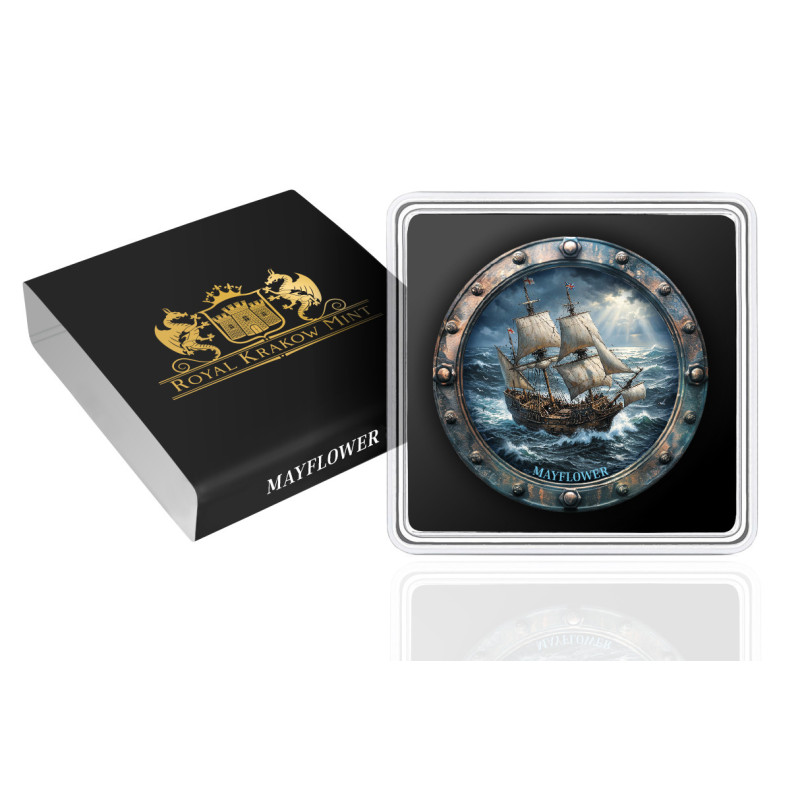
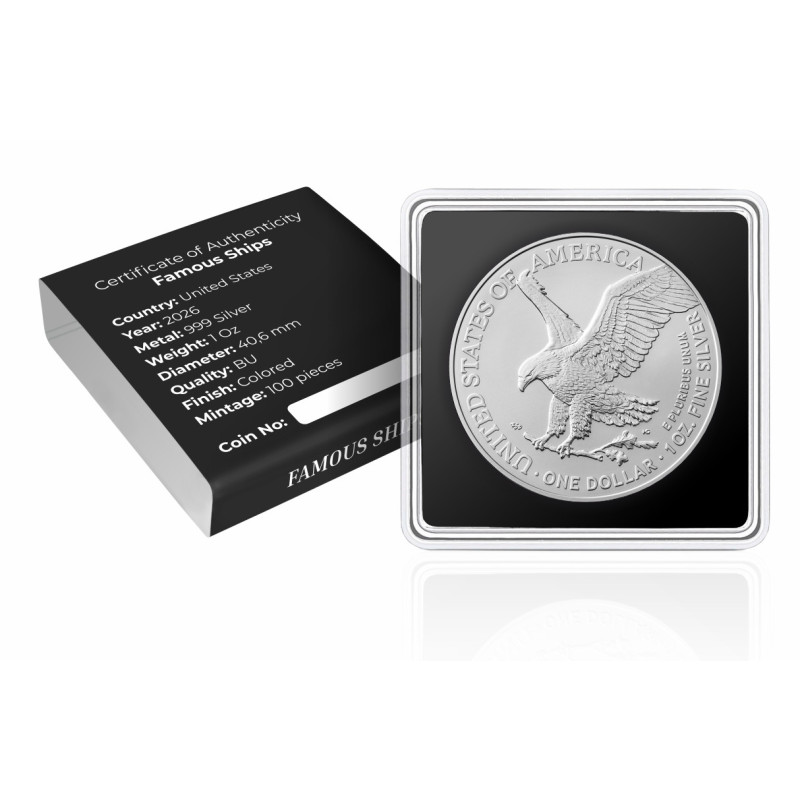
1620, 100 pieces
Mayflower – Famous Ships of America
1 oz silver coin · USA 2026 · Royal Krakow Mint
★ Limited to 100 pieces worldwide
The Spanish dollar stayed legal tender until 1857, when the United States government passed the Coinage Act and ended that status for all foreign money. By then USS Constitution, launched in 1797 and today the oldest commissioned ship in the US Navy, had served for 60 years.
The coin traveled further still. Chinese merchants stamped small "chop marks" on them as a sign they had tested the metal. Some surviving pieces carry several.

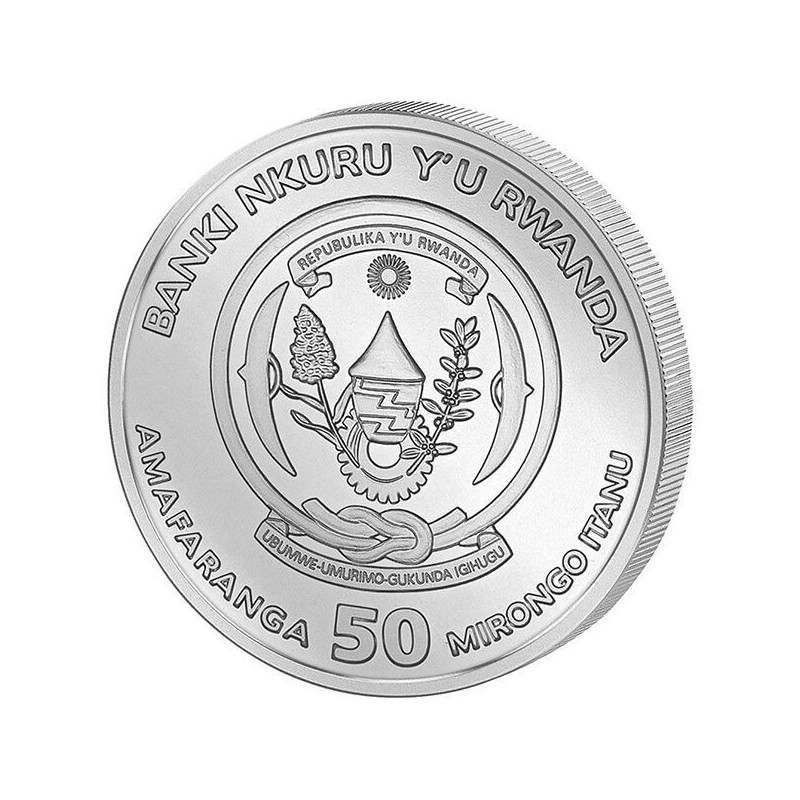
Proof, 1,000 pieces
USS Constitution – Nautical Ounce
1 oz proof silver coin · Rwanda 2023
★ Limited to 1,000 pieces worldwide
What Is a Piece of Eight Worth Today?
Start with the metal. A milled 8 reales weighs 27.07 g, and at .917 or .903 fine that is about 0.79 troy oz of pure silver. A worn, holed or cleaned coin often costs not much more than that.
Everything above the metal is collector value. These things move the price most:
- Mint and date: some mints struck few coins in a given year, and early dates are scarce.
- Type: well-struck pillar dollars and cobs with a full date are in demand.
- Condition: graded on the same 70-point scale used for NGC grading.
- History: a coin from a named shipwreck such as the Atocha, with its paperwork, sells above an identical coin without it.
The top of the market is far from metal value. CoinWeek reports that one of the first 8 reales struck in Mexico City, around 1538, sold for $500,000.
Seawater also changes value. Wreck finds are often corroded, and buyers expect that. Never clean one: our guide on how to clean silver coins explains why cleaning lowers a coin's value.
How to Tell a Real Piece of Eight From a Replica
Pieces of eight are famous, so counterfeits are common, and souvenir shops offer replica cobs by the bucket. Most cheap fakes are cast from a mold of a real coin. Weight is the first test: the actual weight of a genuine 8 reales is about 27 g, and many replicas are lighter or made of base metal.
A magnet test takes a second. Silver isn't attracted to an ordinary magnet, so a coin that sticks is fake; one that doesn't stick can still be fake.
Real cobs are irregular because each was hand-cut and hand-struck: expect hammer marks and an uneven edge, but a sharp cross and shield. Cast fakes often have tiny bubbles and soft details. Watch for artificial aging too, such as black patina or "sea corrosion" added with chemicals.
On milled pieces, check the Pillars of Hercules and the edge design against a coin, or a good image of one, you know is genuine.
For a coin over a few hundred dollars, buy one certified by NGC or PCGS, or from a dealer who documents the provenance. Compare with museum pieces such as this 1740 Mexico City 8 reales at Colonial Williamsburg, 39 mm across.
A numismatist starts by reading the coin before paying for a piece of eight: weight, mint mark, assayer's initials, date and history.
About Magikos Coins
Magikos Coins is a collector coin shop from Kraków, Poland, selling limited-mintage silver and gold coins since 2009. We don't offer historical 8 reales; our ship coins are modern, with stated mintages, from the Santa Maria to USS Constitution.
We buy straight from the mints and are an authorized distributor of the Mint of Poland, Germania Mint, Power Coin, MDM, AllCollect and MINT XXI.
Parcels go tracked worldwide, including to the US, with Global Express or FedEx, and in-stock coins are dispatched within 3 business days. You can pay in US dollars or euros with PayPal or a card.
Our feedback is 100% positive on eBay, Allegro and Catawiki, with an eBay score of 2,505 since 2009. Learn more about us.
FAQ: Pieces of Eight
What is a piece of eight?
A Spanish silver coin worth eight reales, also called the Spanish dollar or real de a ocho. Spain struck it from the 1500s to the 1800s, mostly in the Americas.
Why is it called a piece of eight?
Because it was worth eight reales, Spain's basic unit of currency. Most show the denomination as 8 or 8R.
How much is a piece of eight worth today?
A worn common coin costs little above its metal value, about 0.79 troy oz of silver. Rare dates, high grades and pieces from famous shipwrecks fetch hundreds or thousands of dollars, and the rarest far more.
How much silver is in a piece of eight?
A milled 8 reales weighs 27.07 g. Pillar dollars are .917 silver and portrait dollars .903, so both hold about 0.79 troy oz of pure silver.
Did pirates really use pieces of eight?
Yes. Pirates preferred them as loot because the coin was accepted everywhere. But only a tiny share ever reached pirates; most of it crossed the ocean safely.
Were pieces of eight used in America?
Yes. The Spanish silver dollar was the most common coin in the American colonies and stayed legal tender in the US until the Coinage Act of 1857. The US dollar of 1792 was based on it.