

How to Store Silver Coins So They Don't Tarnish
Every collector has done it: taken a coin out of the cabinet just to check that it still looks the way it did last month. Good storage makes that check boring, which is the point.
This guide covers how to store silver coins at home: which holders are safe, which ones leave green residue, what humidity silver needs, and how to display coins and still preserve their surface.
It's written for collectors of modern proof and enhanced silver coins, where color and gilding are part of the value, though the rules work for bullion and other types of coins too.
TL;DR
- Silver tarnishes when it meets sulfur gases from rubber, wool, felt, some paints, wood and wood-pulp products.
- Leave collector coins in the mint's capsule. Soft PVC flips leave a green residue that can etch the surface.
- The Canadian Conservation Institute suggests keeping metal collections at or below 55% relative humidity, with silica gel in closed storage.
- Hold coins by the edge, with plastic gloves or clean cotton ones, never latex.
- For display, use a closed case away from direct sun, and keep the box and certificate.
Why Silver Coins Tarnish
Silver reacts with sulfur compounds in the air and forms a thin layer of silver sulfide. It starts golden, turns brown and ends up nearly black. Collectors call the even, colorful stage toning; the dark, blotchy stage is tarnish.
On a bullion coin, tarnish doesn't change the silver content, so it doesn't usually affect melt value. On a proof or colorized coin, collectors pay for the surface, and tarnish lowers the price.
The Canadian Conservation Institute lists the usual sources: natural and synthetic rubber, wool and felt, certain paints, and wood or wood-pulp products. Rubber bands and old cardboard boxes are the household versions of that list.
Moisture speeds the reaction, and so does dust in cities, which can carry sulfur pollutants. A coin in a drawer next to a rubber band and a wool scarf will darken faster than one in a dry, closed box.
Not every dark surface is damage. On an antique finish coin, the darkened fields are applied at the mint on purpose, and they shouldn't be touched. Bullion coins can also develop white "milk spots", which is why the Royal Canadian Mint added its MintShield surface treatment to Maple Leafs in 2018.
Keep Collector Coins in the Mint's Capsule
The safest holder for a modern collector coin is the one it came in. Mints seal proof and colorized coins in a hard acrylic capsule sized to the coin, so the surface never touches anything but air. We ship every coin in the mint's own packaging, inside our outer carton.
Opening one can cost a coin part of its value. Fingerprints on a proof field show up as spots months later, and a loose coin can slide and scratch. Our return terms also treat a coin taken out of its capsule after purchase as handled beyond inspection.
Royal Krakow Mint's DeepSea Monsters series is a good example of the standard package: a 1 oz coin in a capsule, plus a certificate of authenticity, with only 100 pieces per design.

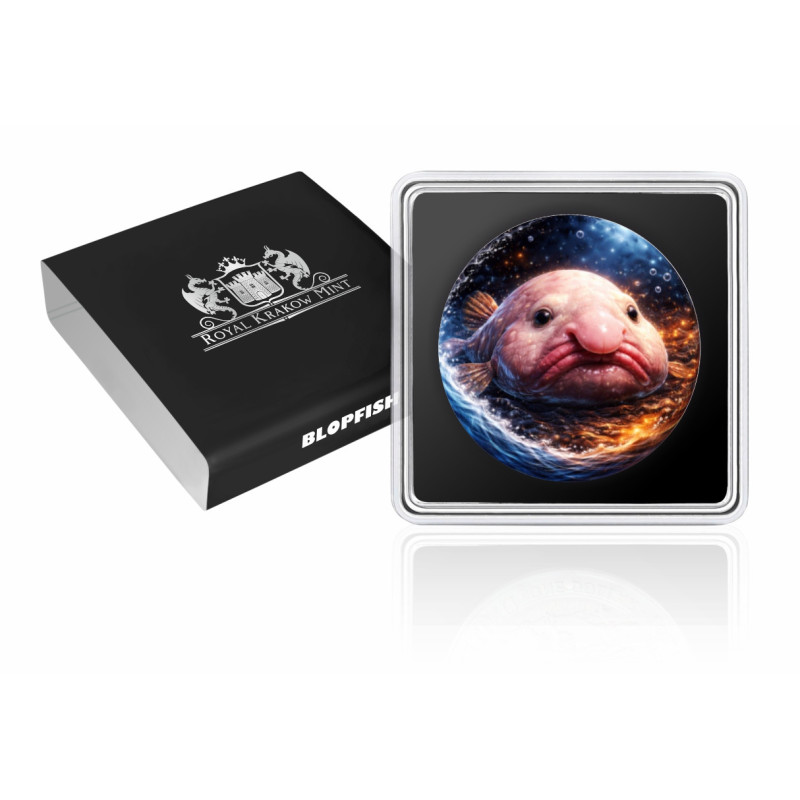
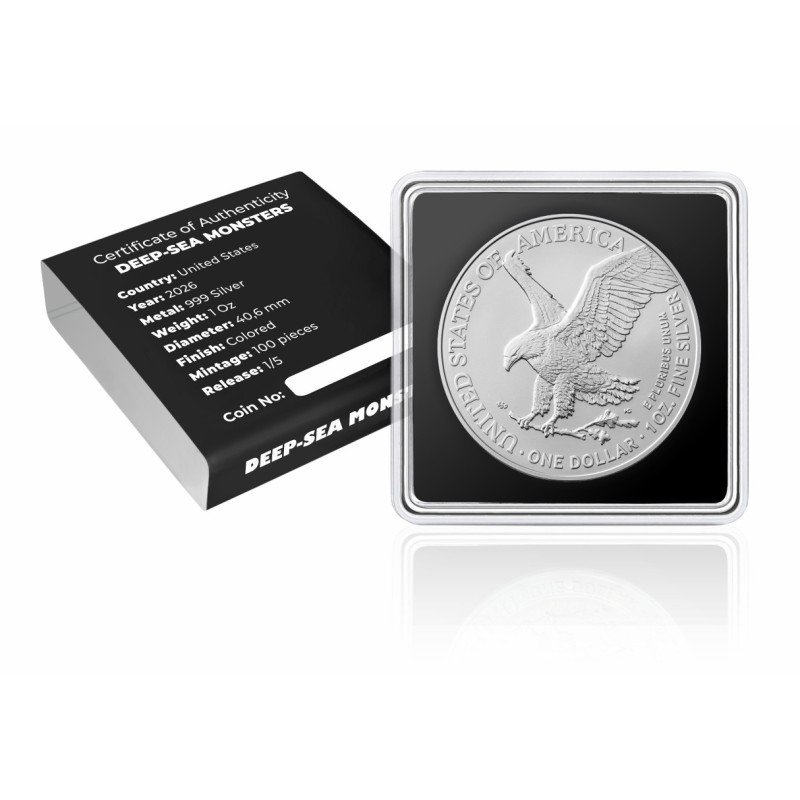
Capsule and certificate
Blobfish – DeepSea Monsters
1 oz silver coin · USA 2026 · Royal Krakow Mint
★ Limited to 100 pieces worldwide
Some coins come with more than a capsule. Shaped and numbered issues usually sit in a capsule inside a fitted case, and the certificate carries the coin's number. Store the case and certificate together, and dry: buyers check for both when a collection is sold.
Spectres' Bull Moose Revolver is a 2 oz coin shaped like Theodore Roosevelt's revolver (80 × 40 mm). Each piece is serial-numbered and comes in a capsule and a case with a numbered certificate.



Numbered, in a capsule and case
Theodore Roosevelt’s Bull Moose Revolver
2 oz silver coin · Samoa 2027 · Spectres
★ Limited to 1,000 pieces worldwide
Safe and Unsafe Coin Holders for Long-Term Storage
Soft vinyl flips are the classic mistake. Their softness comes from a plasticizer, and NGC's conservation service describes what happens as it leaches out: a pale haze first, then green spots, then a shiny green layer that corrodes the surface for good. Humidity speeds it up.
NGC calls soft flips a short-term option only. If a flip smells of vinyl, it contains PVC, and the coin should come out of it. Avoid PVC plastic for anything stored long term: as it ages, it gives off the chemicals that cause the residue.
These holders are fine for long-term storage:
- the mint's original hard capsule;
- hard plastic flips without plasticizer;
- cardboard 2x2 holders with Mylar windows, which the Royal Canadian Mint suggests;
- tubes for bullion coins of one size;
- graded slabs from NGC or PCGS, which are sealed.
Avoid paper envelopes and wooden trays for anything stored for years, since both materials release sulfur compounds. Check the materials before you buy a holder. Archival-grade products, sold as PVC-free and acid-free, are made not to release chemicals as they age, and that's the label to look for on any coin storage product.
Coin albums are fine when the slides are PVC-free. Old albums with soft plastic pages, or pages of cheap paper and cardboard, bring back both problems above: plasticizer and sulfur.
Humidity, Temperature and Other Environmental Factors
Humidity matters most. The Canadian Conservation Institute's note on storing metals says a mixed metal collection should be kept between 35% and 55% relative humidity, at or below 55%. A cheap digital hygrometer in the cabinet tells you where you stand.
Silica gel keeps a closed drawer or box dry, but it fills up. The CCI says it should be checked and reconditioned regularly, which usually means drying it in an oven or swapping the sachets.
Silver storage needs a stable environment. Basements and attics swing the most, and bathrooms and kitchens add steam. An interior closet or a desk drawer in a heated room does better.
Store coins away from household chemicals too. Cleaning products, fresh paint and some adhesives give off fumes, and a cabinet in a garage or laundry room collects them.
We keep colorized and UV-printed coins out of direct sunlight, and we recommend the same at home. Printed color is the one part of a coin nobody can restore.
How to Handle a Silver Coin
Hold a silver coin by its edge, between thumb and forefinger, over a soft towel. A drop onto a hard table can dent a rim, and a dent on a proof shows through the capsule.
The CCI recommends well-fitting plastic gloves or clean cotton ones, and warns against latex, whose sulfur can tarnish silver over time. Cotton absorbs sweat and salts during use, so change it often. Nitrile gloves are the easy plastic choice.
Be careful not to talk over an open coin. Tiny drops of saliva can leave spots on a proof field.
How to Display Coins Without Damaging Them
A display should be closed. A glass-front cabinet or a box with a lid gives protection from dust and sulfur, and a silica gel sachet inside keeps it dry. Coins stay in their capsules on display, so you can still lift one out to look at it.
Some coins are built to be displayed. Mint of Poland's Most Famous Stained Glass Windows set has four window-shaped 1 oz coins (27 × 60 mm) with glass inserts, presented in an LED-illuminated case that lights the glass from behind. The mintage is 500 sets.

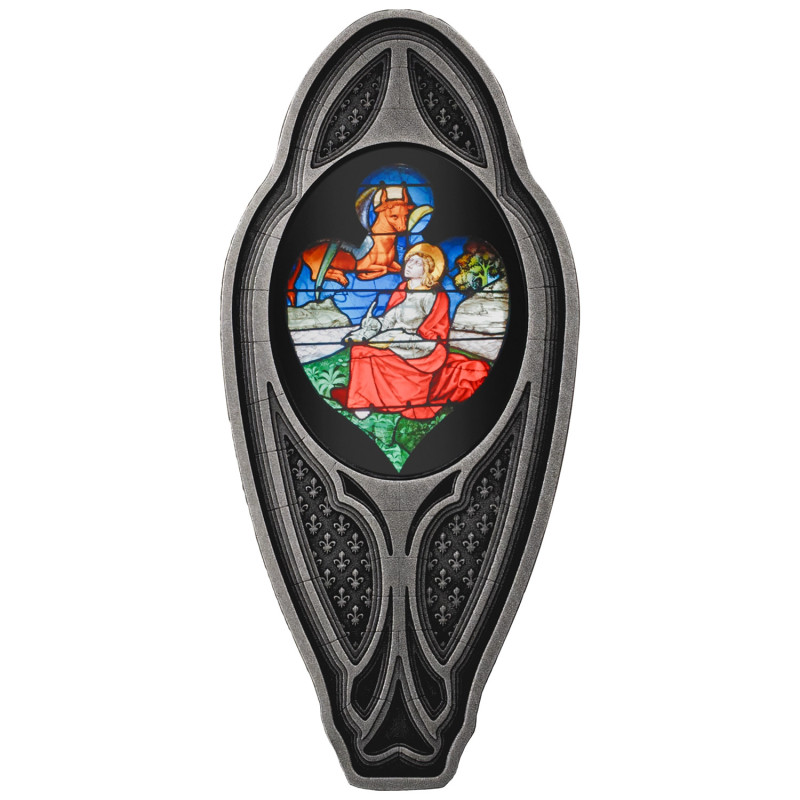
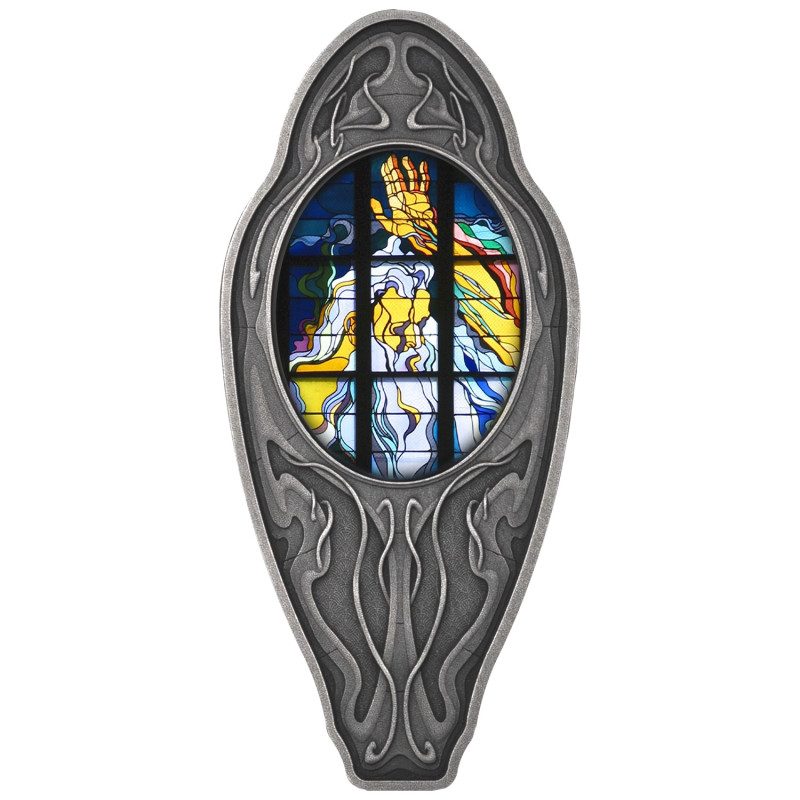
A set made for display
The Most Famous Stained Glass Windows
4 x 1 oz silver coin set · Cameroon 2026 · Mint of Poland
★ Limited to 500 sets worldwide
Shelves near a window, a radiator or an air vent are poor spots for any display. Rotate coins you show often, and put the rest back in storage with silica gel.
How to Store Silver Bullion: Bars, Rounds and Tubes
Silver bullion needs less care than a proof coin, because its value follows the silver price more than the surface. The same environmental factors still apply, from sulfur in the air to plasticizer in a cheap flip.
Rounds and bullion coins of one size stack well in coin tubes, which cost little and make a stack easy to count. The US Mint ships American Silver Eagles in "monster boxes" of 500 coins, packed in 25 tubes of 20. Bars usually come sealed in plastic or on an assay card, and they should stay that way.
Airtight Containers and Silica Gel
Airtight containers limit how much air reaches the silver, which slows tarnishing. They work as long as what goes inside is dry: a box sealed on a humid day keeps that humidity, so add silica gel before closing it.
Gold needs less care. Pure gold doesn't react with sulfur, though lower-karat gold with silver or copper in the alloy can still tone.
The Best Way to Store a Coin Collection: Home, Safe or Vault
To decide on the best way to store coins, look at the size of the collection and how often you want to see it. The best storage methods come down to three places: a box at home, a home safe or a bank safe deposit box.
Storing Coins at Home
You can store a small coin collection in a coin box or a drawer cabinet that takes little space, and that's where most collectors start. It's the only option with access at any hour, which matters if you enjoy taking coins out. The trade-off is security: a box on a shelf is the first thing a burglar finds.
Steer clear of obvious hiding spots, such as a sock drawer, the freezer or the bedroom closet. Burglars know them as well as you do.
A home safe bolted to the floor keeps a collection secure against theft. If you live where natural disasters like wildfires or floods happen, look for a fire and water rating. Put silica gel inside: many fire-resistant safes hold moisture in their insulation, so the air in a closed steel box can be damp.
Bank Safe Deposit Boxes
A safe deposit box keeps coins stored outside the house, behind the bank's own security measures. Access is limited to bank hours, and the contents aren't insured by the FDIC, so check what your home or collection insurance covers.
The same rules apply inside the vault: capsules, silica gel and no rubber bands.
Private Depositories
Private depositories store precious metals in secure, insured vaults for an annual fee. Many offer segregated storage, where your own coins are kept apart and returned to you, not equivalent pieces. They suit large bullion holdings more than a collection you want to take out and look at.
Records and Insurance
Keep records: what you bought, when, from whom, the purchase price and where the certificate is. Photos of each coin help with insurance, and our guide on how to start collecting silver coins covers building a collection from the first coin. Don't post your collection with location details online.
Check your policy limits as well. The standard US homeowners form (ISO HO-3) caps money, coins and bullion at $200 unless you add a rider or schedule the collection separately at its full value.
Don't Clean Coins Before Storage
Don't clean coins before storing them. Cleaning leaves hairlines and removes luster, and grading services mark cleaned coins. If a bullion coin really needs it, our guide on how to clean silver coins shows the safe method and when to leave a coin alone.
About Magikos Coins
Magikos Coins is a collector coin shop from Kraków, Poland. Since 2009 we have been selling limited-mintage silver and gold coins from mints around the world, and every coin leaves us in the mint's own packaging, with a certificate when the mint issues one.
We are an authorized distributor of the Mint of Poland, Germania Mint, Power Coin, MDM, AllCollect and MINT XXI.
- Trusted seller: 100% positive feedback on eBay, Allegro and Catawiki, and an eBay feedback score of over 2,500 since 2009. Read our reviews on Trustpilot.
- Worldwide shipping: we ship worldwide, including the US, with Global Express and FedEx, and every parcel is carefully packed.
- Easy payment: pay in US dollars or euros with PayPal or a card. See all payment methods.
- Direct contact: questions about a coin go straight to us, by e-mail, WhatsApp, Facebook or Instagram.
Learn more about us.
Just added
New in the Magikos Coins shop


The Futurological Congress Stanisław Lem 200 g 2000 Francs CFA...


Green Table Clock Faberge Art 1 Oz 1 Dollar Silver Coin Niue 2026
FAQ: Storing Silver Coins
How do you store silver coins so they don't tarnish?
Store them in hard, PVC-free holders, ideally the mint's capsule, in a closed box with silica gel, at or below 55% relative humidity. Keep rubber bands and wool away from them.
Should I take a collector coin out of its capsule?
No. The capsule protects the surface from fingerprints and scratches. Lift the whole capsule to look at the coin.
Are PVC flips safe for silver coins?
Only for a short time. NGC describes PVC residue that starts as a haze, turns into green spots and can corrode the coin permanently. Use hard flips, Mylar holders or capsules for long-term storage.
What humidity is best for storing silver coins?
The Canadian Conservation Institute recommends 35% to 55% relative humidity for metal collections, at or below 55%. Silica gel and a hygrometer help keep a cabinet in that range.
How do you display coins without damaging them?
Keep them in their capsules inside a closed case, away from direct sun, radiators and windows, with a silica gel sachet. Rotate the coins you show.
What is the best way to store silver coins long term?
The best methods are simple. Store each coin in a hard holder made of PVC-free, archival-grade materials, in a closed box or safe with silica gel, at or below 55% relative humidity, away from rubber, wool and household chemicals.
Is a safe deposit box a good place for silver coins?
It protects against theft, house fires and natural disasters such as floods, but access is limited to bank hours and the contents aren't insured by the FDIC. Use the same capsules and silica gel inside the box.